
The Role of Sound and Music in Shaping a Brand's Creative Direction
Most personal brands document their colours, fonts and tone of voice — then leave audio to whatever the editor found in a stock library that morning. Here's how to treat sound as a deliberate part of your creative direction.
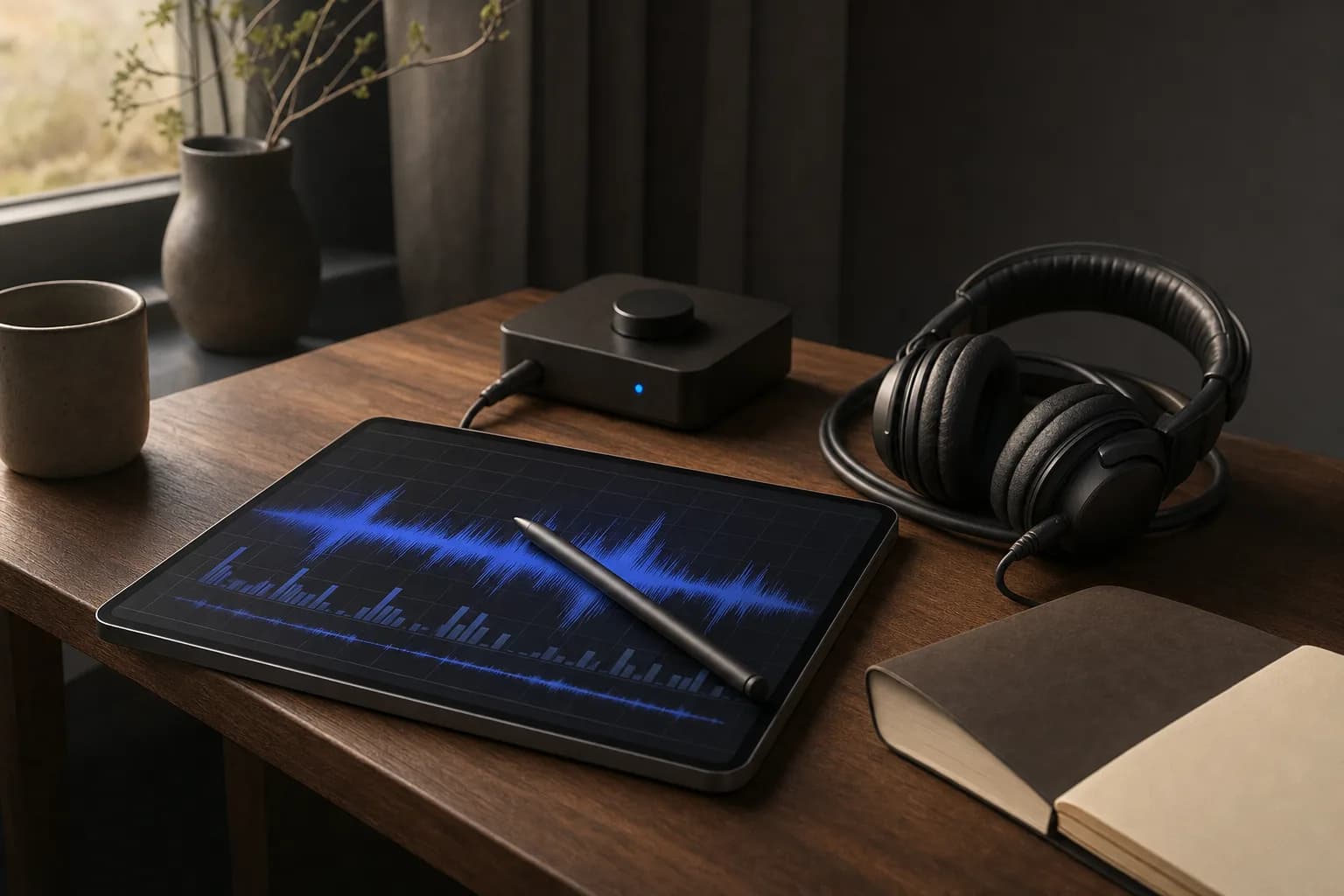
Ask a personal brand to describe its creative direction and you'll usually get a visual answer: a palette, a typeface, a reference board, maybe a rule about never using hard flash. Ask the same brand what it sounds like and the room goes quiet. Yet most content now reaches audiences through a feed where audio plays automatically, headphones are the default, and a viewer forms an impression within the first second — a second in which sound carries at least as much signal as the frame.
Sound design for content isn't an audio-engineering problem. It's a creative direction problem. The decision about which track opens a video, how a voice is treated, whether silence is allowed to sit, and what a transition sounds like — those decisions shape perception the same way a colour grade does. Treating them as post-production afterthoughts leaves a large part of your brand identity to chance, improvisation, or whoever is editing that week.
Why Audio Is the Most Overlooked Layer of Brand Aesthetics
Brand aesthetics have become visually literate and sonically illiterate. Creators invest months refining a thumbnail system, a grading LUT and a set design, then spend ninety seconds scrolling a music library for 'something upbeat.' The asymmetry is understandable — visual references are easy to collect and share, while audio is harder to pin to a mood board. But the audience doesn't experience those layers separately. They experience one impression, and the mismatch between a restrained, editorial visual style and a generic high-energy trap loop reads as inconsistency, even if the viewer can't articulate why.
Sound also does something visuals can't: it carries emotional information while the viewer's eyes are elsewhere. People listen to long-form content while commuting, cooking, training. In those contexts your sonic choices are the brand. A podcast with a thin, roomy voice track and abrupt music cuts communicates 'improvised' regardless of how polished the YouTube thumbnail is. A clean voice with controlled dynamics and a consistent intro motif communicates 'this is a place where things are made properly.'
There's a recognition dimension too. Repetition builds memory, and audio repeats more efficiently than visuals because it survives compression, cropping and platform reformatting. A three-note motif that opens every episode, or a specific transitional whoosh that only you use, becomes a recognition cue that works even when your content is reposted, clipped or watched in a mini-player. Visual branding frequently gets cropped out. A sound rarely does.
Defining a Sonic Identity Before You Touch an Editor
A sonic identity is the audio equivalent of a style guide: a short, specific set of decisions that make future choices faster and more consistent. It should be written before production, not reverse-engineered from whatever your last three videos happened to use. The point isn't to restrict creativity — it's to stop re-litigating the same decisions every time an edit begins.
Start by describing your brand in sonic adjectives rather than genre labels. 'Lo-fi hip hop' is a genre; 'warm, unhurried, slightly imperfect, human' is a direction that can be executed in many genres and will still feel like you. Genre labels date quickly and lock you into trends. Character descriptions survive platform shifts. A finance educator might land on 'measured, spacious, confident, never urgent' — which immediately rules out the ticking-clock tension beds that dominate that niche and makes the brand sound calmer and more authoritative by contrast.
- Core character: three to five adjectives describing how your brand should feel in audio, with one or two anti-adjectives (what you never want to sound like).
- Music palette: two or three defined moods with example tracks, plus instrumentation you avoid — e.g. no aggressive synth risers, no corporate ukulele.
- Voice treatment: a consistent approach to EQ, compression and room tone so your voice sounds the same across formats and locations.
- Signature elements: an intro motif, an outro resolution, and one or two transition sounds reserved exclusively for your content.
- Silence policy: where you deliberately drop music out — before a key point, after a question, under a personal story.
- Loudness target: a consistent perceived volume so your content doesn't jump in a feed or across platforms.
Write this as a one-page document and attach it to every brief. The practical test is simple: could a new editor who has never seen your work produce an edit that sounds like you, using only this page? If not, it's not specific enough. Vague guidance like 'modern and energetic' guarantees you'll keep receiving work that needs rescuing in review.
Writing Sound Into the Creative Brief
Most creative brief templates allocate a generous block to visual references and a single line to music — often just a link to a playlist. That imbalance produces predictable friction: the edit comes back, something feels off, nobody can name it, and three rounds of revisions get spent circling a problem that was never defined up front. Adding a structured audio section to the brief removes that ambiguity before a single clip is cut.
A useful audio section specifies intent, not just taste. For each piece of content, note the emotional arc you want the sound to support — where energy should build, where it should drop away, where the viewer should feel held rather than pushed. For a long-form interview, that might mean: no music under the guest's answers, a sparse bed under the host's framing, full track only on the opening montage and end card. Those three lines prevent the common failure of wall-to-wall music that flattens everything into a single emotional register.
Be explicit about hierarchy as well. Dialogue should sit clearly above music at all times; music should serve the point being made, not compete with it. State a rough relationship — music noticeably under the voice, ducking automatically when someone speaks — so the editor isn't guessing. And include a short list of banned sounds. Most niches have audio clichés that have been used into meaninglessness: the cinematic boom under every statistic, the clock tick under every warning, the swoosh on every text pop. Naming them in the brief is faster than removing them in review.
Finally, brief for the platform. A sixty-second vertical clip has roughly a second to establish tone and often plays at low volume in a noisy environment, which favours clear transients and a strong voice. A twenty-minute YouTube essay watched on headphones allows dynamic range, quiet passages and longer musical builds. Using the same audio approach for both means one of them will always be compromised.
Practical Sound Design for Content Across Formats
The highest-return audio improvement for most personal brands isn't music at all — it's the voice. A clean, well-recorded voice with consistent tone forgives a lot of imperfection elsewhere. That means treating the recording space before upgrading the microphone: soft furnishings, a rug, recording away from parallel bare walls, never in a kitchen or bathroom. Reverb baked into a recording cannot be meaningfully removed; room tone is a creative decision made at capture, not in post.
Once the voice is solid, music becomes a structural tool rather than a blanket. Think of it as punctuation. A track that enters on a specific line signals 'this part matters.' A track that drops out entirely before your key argument creates a gap the listener leans into. Many creators discover their most effective moment is the one where everything goes quiet and there's nothing but a voice — an effect impossible to achieve if music has been running continuously for four minutes.
- Short-form vertical: establish tone within the first second, keep the music simple enough to survive phone speakers, and avoid intros that delay the hook.
- Long-form video: use music sparingly to mark chapters and transitions, allow genuine silence, and keep a consistent intro motif for recognition.
- Podcast and audio-only: prioritise voice consistency across episodes and guests; a steady intro, outro and bed structure does more for perceived quality than any single effect.
- Stories and casual content: lower production is fine, but keep the voice treatment and signature sounds consistent so it still reads as the same brand.
- Paid and promotional edits: audio should match the organic content it borrows credibility from — an ad that sounds like a different brand converts worse than one that feels native.
Two operational points matter more than they appear. First, licensing: build your library from sources you can document, keep records of what was used where, and avoid trending audio for anything you intend to run as paid media or keep evergreen. Second, loudness consistency: normalise your exports to a steady perceived level so audiences never reach for the volume dial between your pieces. Both are unglamorous, and both protect the identity you've built.
Testing, Iterating and Keeping Sound Accountable
Sound choices are often defended as taste, which makes them difficult to improve. The fix is to treat them like any other creative variable: isolate, test, observe. Keep everything constant in two short-form edits except the audio approach — same script, same footage, same thumbnail logic — and watch the early retention curve. If viewers drop in the first two seconds on one version and not the other, the audio intro is doing something measurable.
Qualitative signals are useful too. Audio problems show up in comments in oddly specific language: 'the music is distracting,' 'I had to turn it up,' 'something about this feels different.' The last one is the most valuable, because it usually means you've drifted from your own identity without noticing — a new editor, a new library, a trend chased for one video that quietly became the default.
Build a light review rhythm. Once a quarter, play five recent pieces back to back with your eyes closed and ask whether they sound like one brand. Then compare them against your sonic identity document and note what drifted. Evolution is fine and expected; unintentional drift is what erodes recognition. The goal is a sound that changes deliberately, in step with your visual direction and positioning, rather than one that mutates every time someone new touches the timeline.
Bringing the Whole Picture Together
Creative direction has always been about managing how a brand is perceived across every channel it touches, and for personal brands that increasingly means audio-first environments. A documented sonic identity, an audio section in every creative brief, a well-captured voice and a disciplined approach to music turn sound from a last-minute search into a deliberate expression of who you are. The work is modest — a page of decisions, a few recording habits, a quarterly listen-back — but it compounds in the same way visual consistency does.
The brands that feel coherent aren't the ones with the biggest production budgets. They're the ones where every layer agrees with every other layer, so the audience gets one clear impression rather than a set of competing ones. Extend your creative direction past the frame, and your content starts to be recognised before it's even seen.
Frequently asked questions
A sonic identity is a defined set of audio choices that make a brand recognisable by ear — music character, voice treatment, signature motifs, transition sounds and loudness levels. It works like a visual style guide, but for everything the audience hears. Documenting it means anyone editing your content can reproduce the same feel without guesswork.
Yes. Music and sound carry emotional information that shapes how authoritative, polished or trustworthy content feels, often before the viewer processes what's being said. A mismatch between a restrained visual style and an aggressive music bed tends to read as inconsistency, even when the audience can't explain why.
Voice quality comes first in almost every case. A clean, consistent voice recorded in a treated space does more for perceived production value than any track choice, and reverb captured at the source can't be removed later. Once the voice is reliable, music becomes a tool for structure and emphasis rather than a cover for weak audio.
Add a dedicated audio section that states the emotional arc you want sound to support, where music should enter and drop out, how music should sit relative to dialogue, and a short list of clichés to avoid. Also specify the platform, since short vertical clips and long-form headphone viewing need different approaches. Specific intent prevents revision rounds spent circling an undefined problem.
Trending audio can help short-term reach on some platforms, but it ties your content to a moment and may carry licensing limitations, especially for paid media or evergreen assets. A safer approach is building a documented library you control and reserving trend participation for content you're comfortable having a short shelf life.
A quarterly review is usually enough. Play several recent pieces back to back with your eyes closed, check whether they sound like one brand, and compare them against your sonic identity document. Deliberate evolution is healthy; the thing to catch is unintentional drift caused by new editors, new libraries or one-off trend experiments becoming defaults.
Ready to put this into practice?
Tell us what you’re building and where you want to grow — we’ll help you turn it into a system.
Related reading
How to Adapt Your Tone for Each Social Media Platform Without Losing Your Voice
Sounding native on LinkedIn, TikTok and Instagram doesn't mean becoming four different people. Here's how to separate the part of your voice that should never move from the parts that should flex by platform.

How to Organize a Content Asset Library So Nothing Gets Lost
Most teams don't lose assets because they're careless — they lose them because the filing system was built for ten pieces a month and never rebuilt for a hundred. Here's a structure that scales with you.